
Couples work
Couples therapy for couples who have run out of road.
Online couples therapy, and in person by arrangement, for partners who have tried the usual approaches and need something more honest. This is direct, skilled, deeply involved work, drawn from Terry Real’s Relational Life Therapy.
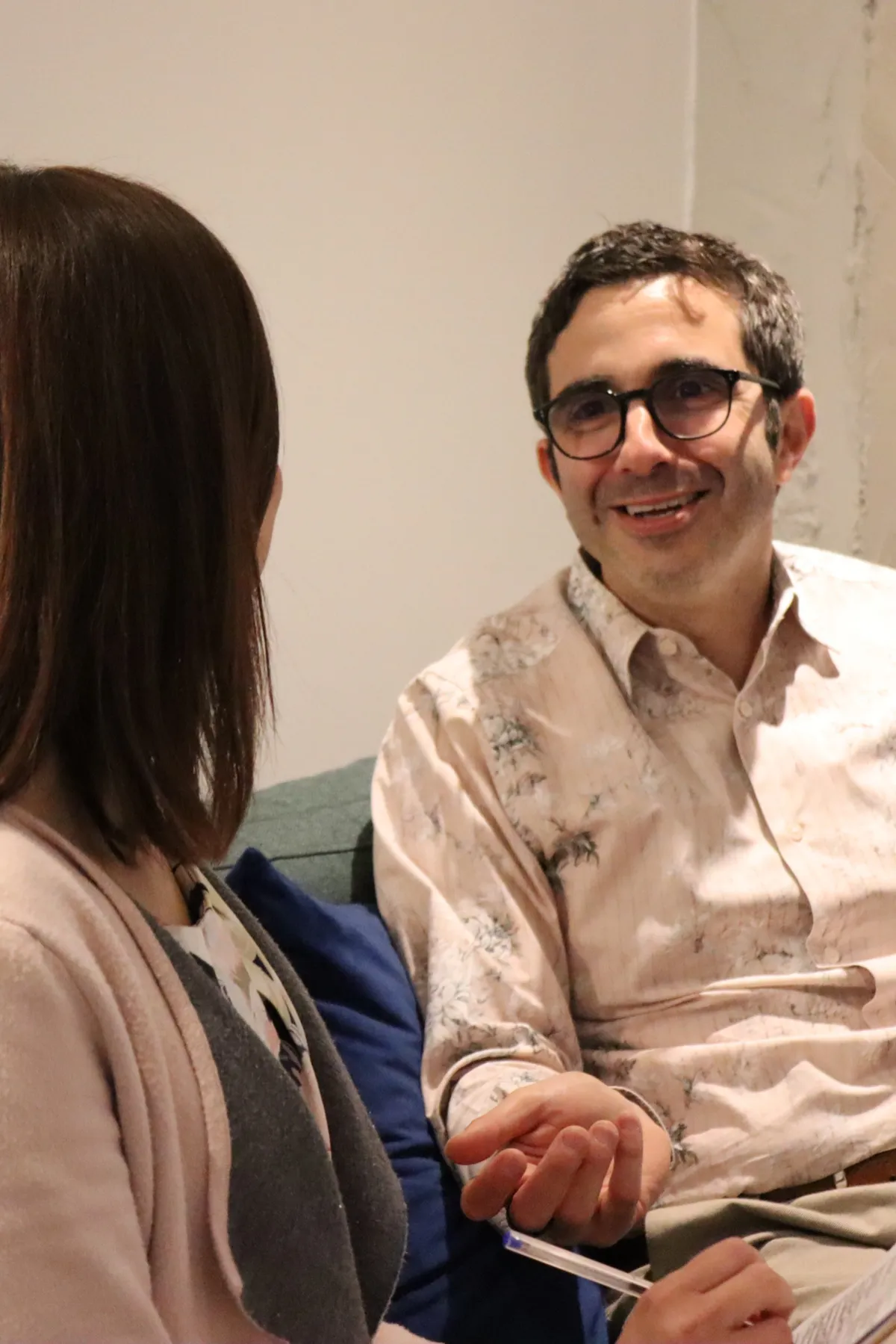
Oliver Barnett
Relational work for couples and business partners, built on truth, accountability and repair.
Oliver Barnett
Relational work for couples and business partners, built on truth, accountability and repair.
Who it's for
This is for the couple who has already tried.
Maybe you have been to counselling before and came away feeling like nothing really shifted. Maybe you have read the books, listened to the podcasts, had the same argument so many times you could perform both parts. You love each other, or you did, and you cannot work out why you keep ending up in the same painful place.
You do not need someone to referee another round of the same conversation. You need someone who will get in there with you and help you change the pattern itself.

“I work differently, and the difference is deliberate. When the situation calls for it, I will take a side.
Not to assign blame, and not because I have stopped caring about one partner, but because there are moments when staying neutral is the least helpful and least honest thing a therapist can do.”
—Oliver Barnett
The wedge, in full
Most couples therapy is built to be neutral.
The therapist stays carefully balanced, never takes a position, and helps the two of you communicate. For plenty of couples that works. If you are reading this, it probably has not.
My work is different on purpose. It is interventional, which means I get involved. When the story you are telling yourself about your partner is keeping you stuck, I will challenge it. I will not sit neutrally while the two of you go in circles, because neutrality is exactly what has not worked.
This is not about blame, and it is not about one of you being the problem. It holds both of you accountable, to the relationship and to each other. Done well, that is the most respectful thing a therapist can offer, because it treats you both as capable of change.
“I work differently, and the difference is deliberate. When the situation calls for it, I will take a side.
Not to assign blame, and not because I have stopped caring about one partner, but because there are moments when staying neutral is the least helpful and least honest thing a therapist can do.”
—Oliver Barnett
An approach that draws on more than one method
No single method has all the answers.
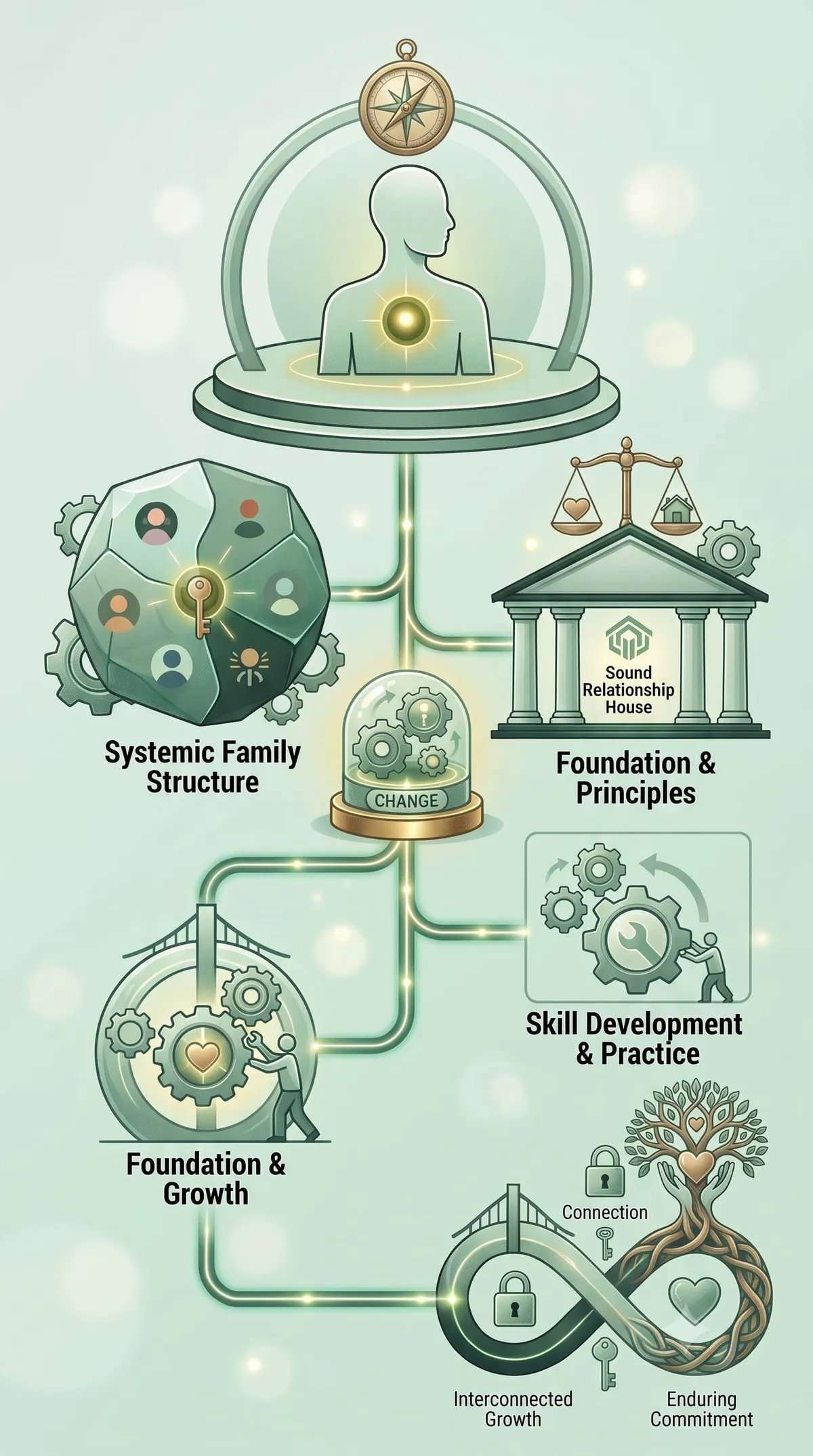
No single method has all the answers, and I do not work as though one does. My core training is in Terry Real’s Relational Life Therapy, and it shapes how I work more than anything else. But I draw on more than that: Internal Family Systems, which helps us understand the different parts of ourselves that show up under pressure; the Gottmans’ research on what actually makes relationships last; and the work of Esther Perel and Emotionally Focused Therapy on desire, connection and how we reach for each other.
Combining Internal Family Systems with Relational Life Therapy in particular means the work is not only talk. Some of it happens in the body, noticing what is going on in you as it happens, because that is often where the real change takes hold.
Relational Life Therapy
Terry Real's method, the core of how I work
Internal Family Systems
Understanding the parts of ourselves that show up under pressure
The Gottmans
Research on what actually makes relationships last
Esther Perel and EFT
Desire, connection, and how we reach for each other
Accountability in practice
What the directness actually looks like.
The Feedback Wheel
I give you a structure for the conversations that keep going wrong.
When something has hurt you, the instinct is to lead with blame, and blame puts your partner on the defensive before you have even said what you need. I teach couples a tool called the Feedback Wheel: a simple, four-step way of saying what happened, what you made it mean, how you felt, and what you would like instead. It sounds small. It changes everything, because it lets you raise the hard thing without the conversation immediately catching fire.
Naming the pattern
I name the moves that are quietly wrecking things.
There are a handful of predictable ways people sabotage their own relationships. Needing to be right. Trying to control your partner. Saying whatever you feel in the name of honesty. Getting your own back. Withdrawing and going silent. A neutral therapist will watch you do these and stay quiet. I will name the one you are doing, in the moment, kindly, and show you what it is costing you. You cannot change a pattern you cannot see.
Honest feedback
I will tell you when you are the one in the wrong.
This is the part that makes my work different, and the part people are most relieved by once they get used to it. If one of you is behaving badly, I will say so. Not to shame you, but because the alternative, pretending you are both equally right in every standoff, helps no one. Being told the truth by someone who is clearly on your side is not an attack. It is what most of us have been missing.
Responsible time-out
I equip you with tools you can use without me.
The goal is not to need me forever. When things get heated, I will have taught you how to take a responsible time-out: how to step back before you do damage, and how to come back and finish the conversation rather than burying it. These are skills, not insights. You keep them long after the work with me is done.
What the work involves, and what you leave with
Three things, in this order.
1
Seeing clearly
What is actually happening between you, including the parts that are hard to look at.
2
Understanding where it comes from
The way you each behave under stress was usually learned long before you met.
3
Building the skills
So you are not dependent on me to keep the relationship on track.
1
Seeing clearly
What is actually happening between you, including the parts that are hard to look at.
2
Understanding where it comes from
The way you each behave under stress was usually learned long before you met.
3
Building the skills
So you are not dependent on me to keep the relationship on track.
The work moves through three things, roughly in this order. First, seeing clearly what is actually happening between you, including the parts that are hard to look at. Then understanding where it comes from, because the way you each behave under stress was usually learned long before you met. And finally, building the skills to do it differently, so you are not dependent on me to keep the relationship on track.
What you take away is the important part. Not a vague sense of having talked things through, but a real understanding of your pattern and the tools to manage it yourselves. Every relationship moves through harmony, disharmony and repair. The couples who last are not the ones who avoid the disharmony. They are the ones who have learned how to repair.
The engagement shape
What to expect.
Most couples work with me through a structured programme, either three months or six, because real change takes more than a session or two. Single sessions are available where that suits you better. The work is online as standard, which keeps it flexible around your lives, with in-person sessions in London by arrangement.
The first step is always a free 15-minute call, so we can both work out whether this is the right fit before you commit to anything. We will talk about price on that call. It is not on the site because the right starting point is a conversation, not a number.
Format
Online as standard, in-person in London by arrangement
Structure
3 or 6-month programme, single sessions available
First step
A free 15-minute call, no commitment
Start here
Every relationship moves through harmony, disharmony and repair.
If you have lost your way back to each other, that can be learned again.
Start with a free 15-minute call. No pressure, no commitment, just a conversation about whether this is right for you.

RLT Certified Coach. IFS Informed.
In advanced training to become an
RLT Certified Therapist.
Relational work for couples and business partners, built on truth, accountability and repair.
CUSTOMER CARE
Something to read while you decide.
Receive occasional writing on relationships, repair and how this work takes shape. By signing up, you agree to receive occasional emails from Oliver Barnett. You can unsubscribe at any time.
Copyright 2026. Oliver Barnett Relational Therapy. All Rights Reserved.